

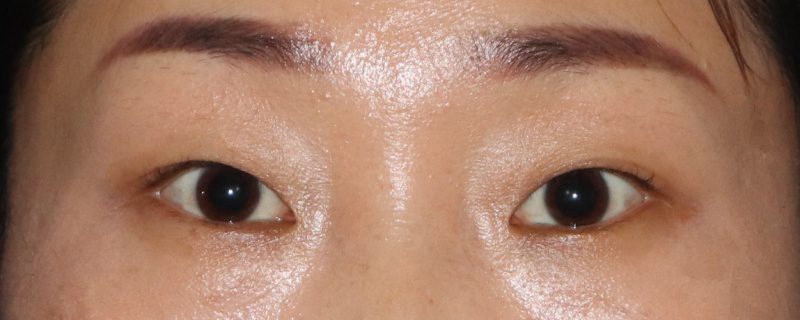
Quick Summary
- The absence of a double eyelid crease (“single eyelid”) is common in some East Asian populations
- The cause of absent eyelid creases is the lack of attachments from the eyelid elevator muscle to the skin, most commonly congenital, followed by aging changes
- Absent double eyelid creases can create the appearance of smaller eyes and may contribute to a tired and sleepy look. Individuals with double eyelid creases are often perceived as alert, bright and attractive
- Eyelid surgeries require a high degree of precision. The anatomy of the upper eyelid is complex and delicate and requires a high level of precision for successful outcomes. Complications are uncommon but are treatable in experienced hands.
What is Double Eyelid Surgery and How Does It Work
The aim of double-eyelid surgery is to create a fold (if absent), or to unveil a fold that is hidden by age-related skin drooping.
Eyelid crease creation is done by suturing the skin or superficial muscle to the underlying eyelid cartilage or the elevator muscle. Individuals with hidden creases will require removal of excess upper eyelid skin to unveil the pretarsal skin.
Surgeries are performed as ambulatory cases in our attached operating suite, under local anesthesia or with optional light sedation.
How Is Double Eyelid Surgery Performed?
Double eyelid surgery may be classified into crease creation and crease accentuation (deepening) procedures.
Crease creation procedures are divided into minimal-incision “suture” techniques, and open-incision double eyelid techniques.
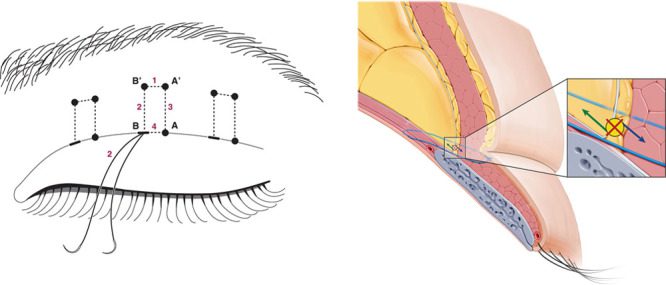
- Minimal-incision surgery. 3 to 5 small incisions are made along the planned double eyelid crease and sutures are passed between the skin/superficial muscle, through the cartilage and conjunctiva, and back to the skin/superficial muscle. Minimal incision techniques are associated with slightly faster recovery. However, some cases experience loss of crease in the long-term due to suture breakage, and may require secondary surgery for crease re-creation. Minimal-incision techniques are unable to remove droopy skin and are best suited for young individuals only.
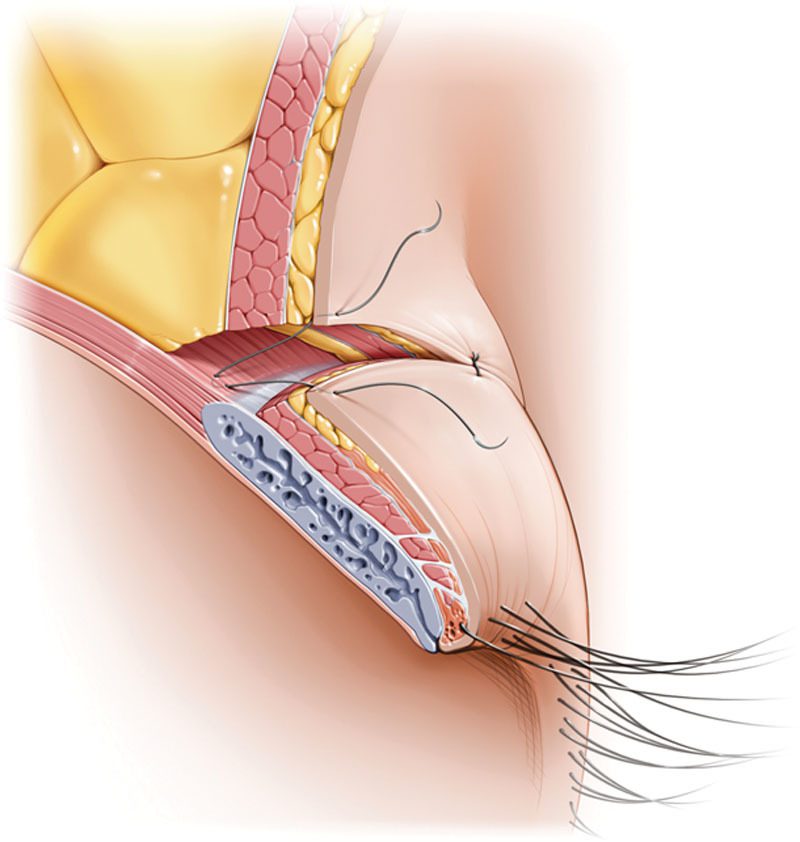
- Open-incision surgery. An incision is made along the crease, and sutures are placed between the superficial muscle and eyelid cartilage, or the elevator muscle. This procedure demands a high degree of technical precision and is often done under surgical magnification with a microscope. Open-incision surgery gives the most precise and enduring method of crease creation, and also permits excision of excess skin if required. Open-incision surgery is associated with slightly longer recovery than minimal-incision techniques.
Crease accentuation is achieved by skin excision through one of two ways:
- Upper eyelid crease incision. This is appropriate for individuals with mild/early skin laxity confined to the upper eyelid only. The upper eyelid crease incision is well-concealed but does not address skin laxity that is at the outer third of the upper eyelid, or outside of that.
- Infrabrow (or subbrow) incision. The incision is made at the lower border of the eyebrow and the excess upper eyelid skin is removed, and eyelid skin tightened by closing it up vertically. This incision addresses moderate-to-severe degrees of skin laxity, includ